
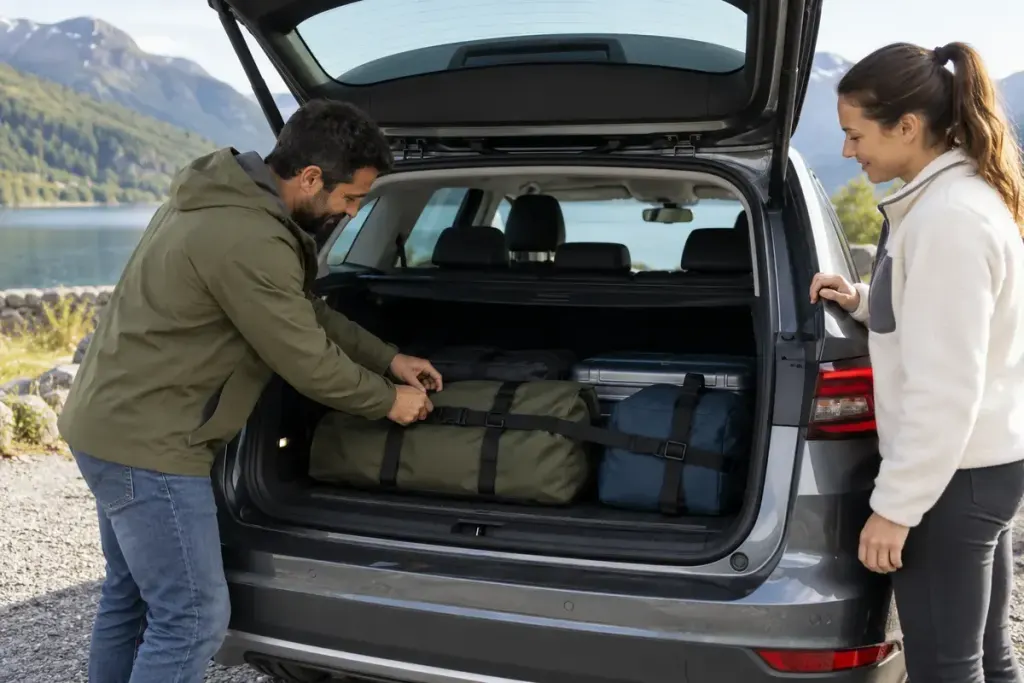
Getting the boot to close can feel like the final packing test. It only proves that the luggage fits within the opening. Bags, bottles, and hard cases still need to stay where they belong when the car brakes or turns.
The RAC’s guide to moving belongings by car discusses secure loading and the effect a load can have on driving. For the actual restraint points, load limits, and approved accessories, use your vehicle’s manual. A convenient hook is not automatically rated to restrain a heavy suitcase.
Pack for movement, not just for a photograph
Put substantial items in a stable position within the designated cargo area, and use suitable restraints according to the vehicle instructions. Keep loose hard objects out of the passenger compartment. Do not rely on a parcel shelf to hold heavy items, or use child-seat anchors for cargo unless the manufacturer expressly permits it.
Before leaving, imagine the first sharp stop. Which bag could slide? What could fall when the tailgate opens? Can a bottle roll towards the driver’s feet? These questions reveal different problems from a simple “does it fit?” check.
Make frequently needed items accessible without unpacking restraints at every stop. For example, a small travel bag can hold tickets and a charging cable while the large cases remain secured. Recheck the arrangement after removing a substantial item because the remaining luggage may now have room to move.
Securing cargo does not increase the car’s permitted load. Passengers, luggage, and accessories still count towards the relevant limits. If the planned load cannot be carried within those limits and restrained properly, reduce it or arrange another journey. The aim is a car that can be driven safely, not a boot filled to its last available centimetre.