
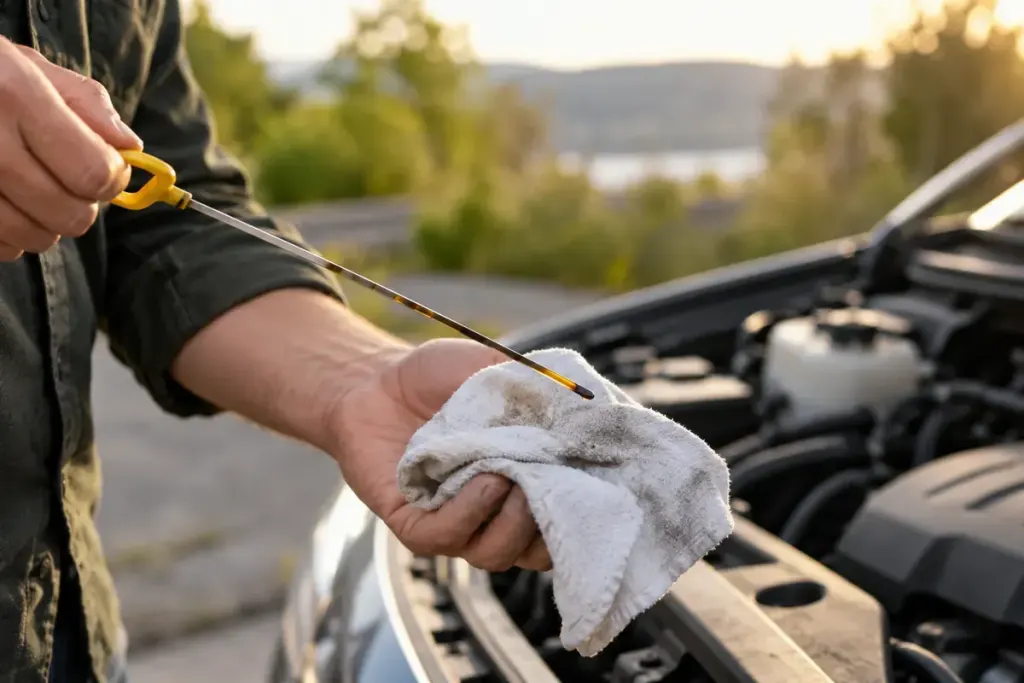
The dipstick comes out with oil smeared along one side. Is that the level, or did it pick up oil on the way out? A useful check follows the vehicle’s measurement procedure rather than treating the first visible mark as the answer.
For example, the 2007 Honda Fit owner’s manual describes waiting after switching off the engine, wiping the dipstick, reinserting it fully and reading it again. This is a model-specific example. Your car may require a different sequence or use an electronic measurement instead.
Find the conditions before opening the bonnet
Look up the exact model and engine. Note the required parking surface, engine state and waiting time. Read the bonnet-support and hot-component precautions too; a familiar-looking engine bay is not a reason to skip them.
If the car has an electronic oil-level display, check the conditions needed for a valid reading. An unavailable result is not automatically a low reading. Do not invent a dipstick procedure for a vehicle that uses another method.
Keep the result separate from the repair decision
A level check tells you about the measured level under those conditions. It does not by itself diagnose a leak, explain consumption or establish that every part of the lubrication system is healthy.
Record the date, mileage and result if you are monitoring a change. If the manual permits topping up, use the specified oil and method, add cautiously and recheck as directed. Do not assume that more oil is safer or pour in a complete container merely because it is open.
- Use a clean wiping material appropriate to the instructions.
- Identify the correct cap or dipstick before touching it.
- Keep dirt out of openings.
- Seek qualified help if the level cannot be read reliably or repeatedly changes unexpectedly.
A dashboard oil-pressure warning is a separate matter. Follow the manual’s immediate response rather than continuing to drive while planning a casual check later. Keep the correct manual accessible so a routine observation does not become guesswork around a hot engine.