
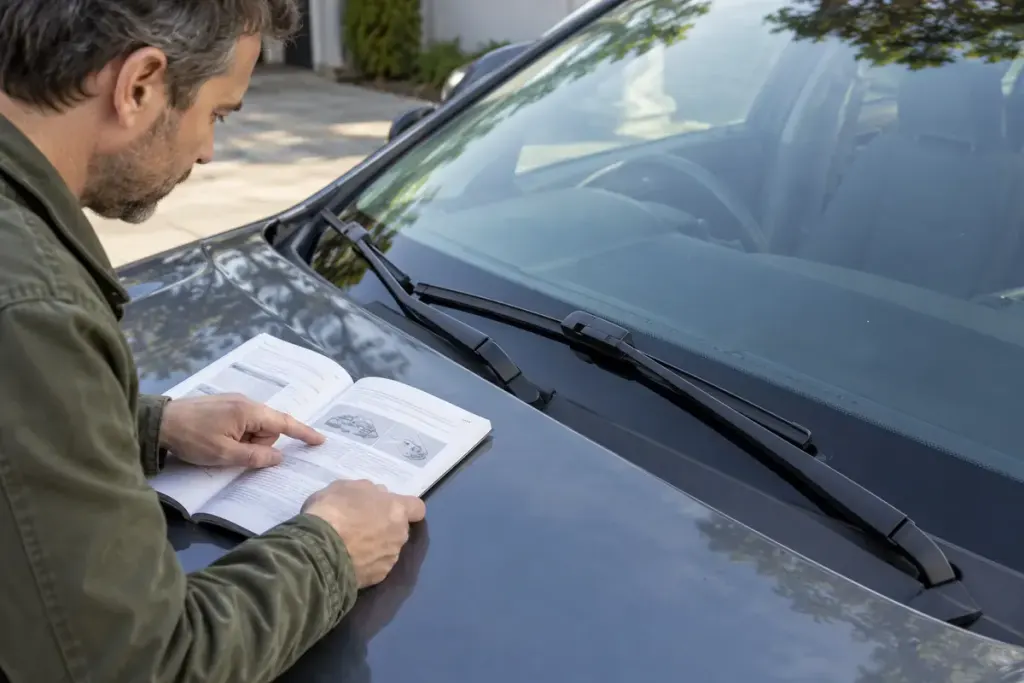
On some cars, the parked windscreen wipers sit partly beneath the bonnet edge. They look accessible enough to lift, but the arm may strike the bodywork before it clears the glass. The missing step is often the manufacturer’s wiper service position, which moves the arms to a place intended for maintenance.
For example, Volvo’s V60 instructions describe a service position and warn about returning raised arms before normal operation. Other models use different controls or timing. A sequence demonstrated for a similar-looking car is not reliable evidence that yours works the same way.
Find the instruction before touching the arm
Look up the exact model year in the owner’s manual and search for “wiper service position” or the blade-replacement section. Check the required ignition state, whether automatic wiping must be disabled and how to return the blades afterward. Do this with the car safely parked.
If the wipers are frozen to the windscreen, follow the vehicle’s defrosting instructions rather than trying to force them through a service cycle. A maintenance setting does not make ice disappear or protect a blade that is physically stuck.
Once the correct position is established, support the arm while handling the blade and follow the replacement procedure for its connector. Do not let a bare sprung arm snap onto the glass. Keep fingers clear of moving mechanisms and avoid triggering the wipers while an arm is lifted.
Before returning to normal operation, confirm that each blade is secured and the arms have been lowered as the manual requires. Remove tools and packaging, then perform the recommended check. If the arm still appears obstructed or the controls do not behave as described, stop and have the arrangement checked.
The useful habit is simple: treat a concealed parked position as a prompt to consult the manual. An extra minute identifying the proper setting is preferable to discovering clearance limits by pulling harder.