
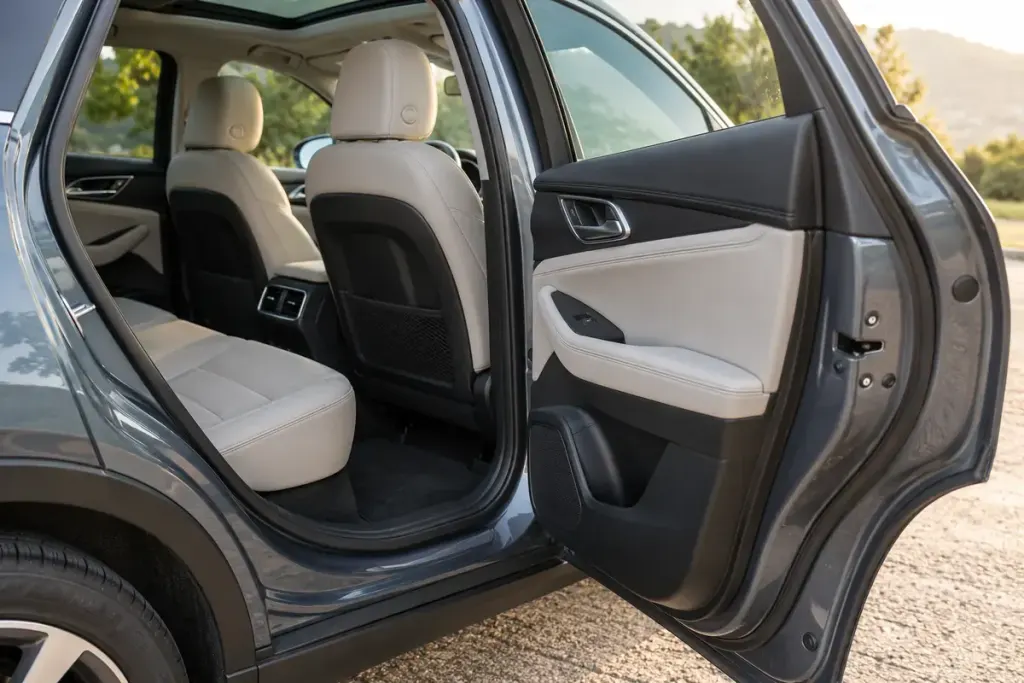
A rear passenger pulls the inside handle and nothing happens, even after the central locking has been released. One possible explanation is an engaged child lock. The feature changes how that rear door can be opened; it is not simply another name for locking the whole car.
Manufacturers use different controls. Some vehicles have a mechanical switch at the door edge; others use an electronic control. Ford’s child-safety guide is one manufacturer example. Use the owner’s manual for your exact vehicle, model year and market before operating an unfamiliar control.
Check the setting while safely parked
Find the relevant manual section and identify the control before moving anything. If the rear doors have separate mechanical settings, inspect both. Do not assume a setting on one side automatically changes the other.
Follow the manufacturer’s test procedure in a safe parked location, keeping access available and avoiding trapping a passenger inside. If a lock behaves inconsistently or the instructions do not match the car, have a qualified service provider check it.
Explain the exit plan
An adult using the back seat may reasonably expect the inside handle to work. Tell them when the child lock is engaged and arrange who will open the door. This matters particularly for passengers who may find an unexpected restriction distressing.
Window locks, central locking and child locks can be separate features. Learn what each control does rather than assuming one button covers every situation. Also check the vehicle’s emergency guidance; ordinary operating instructions should not be improvised during an emergency.
Child locks do not replace appropriate child restraints, adult supervision or checking the vehicle after a journey. Never leave a child unattended in a parked car. Before a borrowed or newly purchased vehicle’s first family trip, a brief parked review of the rear-seat controls can prevent confusion at the destination.