
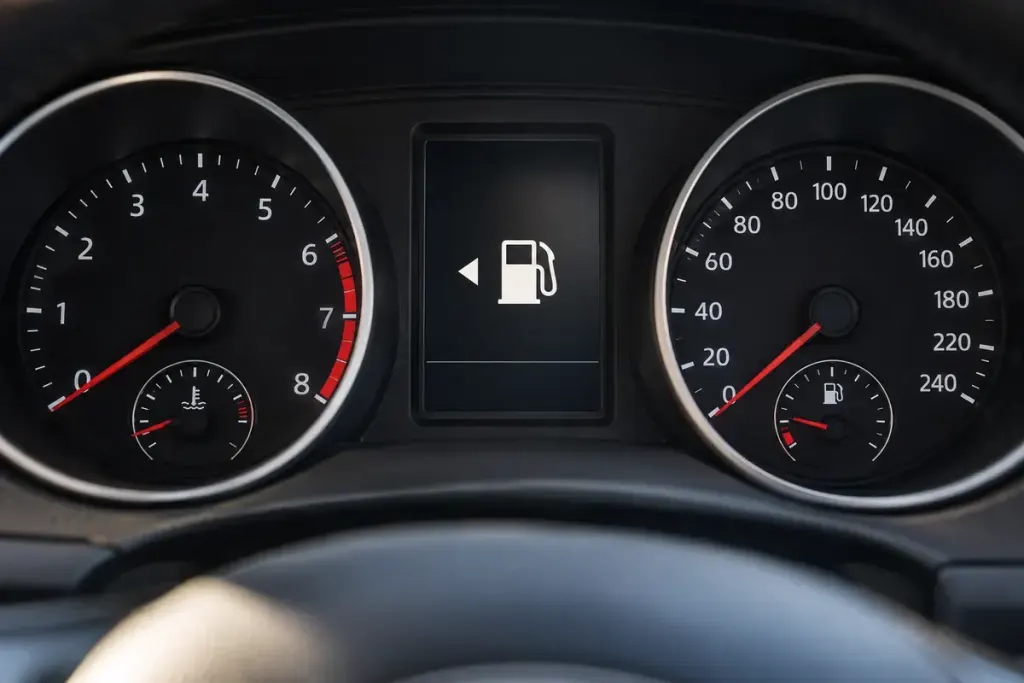
You approach a fuel pump in an unfamiliar car and realise you do not know which side holds the filler door. Many dashboards provide a small clue: a triangular arrow beside the fuel-pump symbol.
A Ford owner’s manual explains that its adjacent arrow indicates the side of the vehicle where the fuel-filler door is located. This is a model-specific example of a common feature, not proof that every vehicle uses the same display.
Look while safely parked
Find the symbol before joining the queue. If the display has an arrow, confirm its meaning in the handbook. If there is no clear indicator, inspect the vehicle from outside or consult its instructions rather than guessing from the shape of the pump icon’s hose.
A rental or borrowed car deserves a quick familiarisation before the journey. Locate the filler door release if one is needed and understand how the cap or capless system works. Ask the rental desk about anything unclear while help is readily available.
The arrow does not choose the fuel
Filler location and fuel specification are separate questions. Read the vehicle’s fuel label and handbook for the correct product. Do not infer fuel type from the side of the car, the colour of a dashboard symbol or your previous vehicle.
At the forecourt, position the car according to the site’s markings and leave adequate room. Do not stretch a hose across the vehicle or make an abrupt manoeuvre just to correct a mistaken approach. Follow the station’s instructions and normal refuelling safety requirements.
The arrow is a useful convenience once you know what it means. A brief check before entering the forecourt can remove one distraction, leaving you free to verify the more important details of the actual refuelling process.