
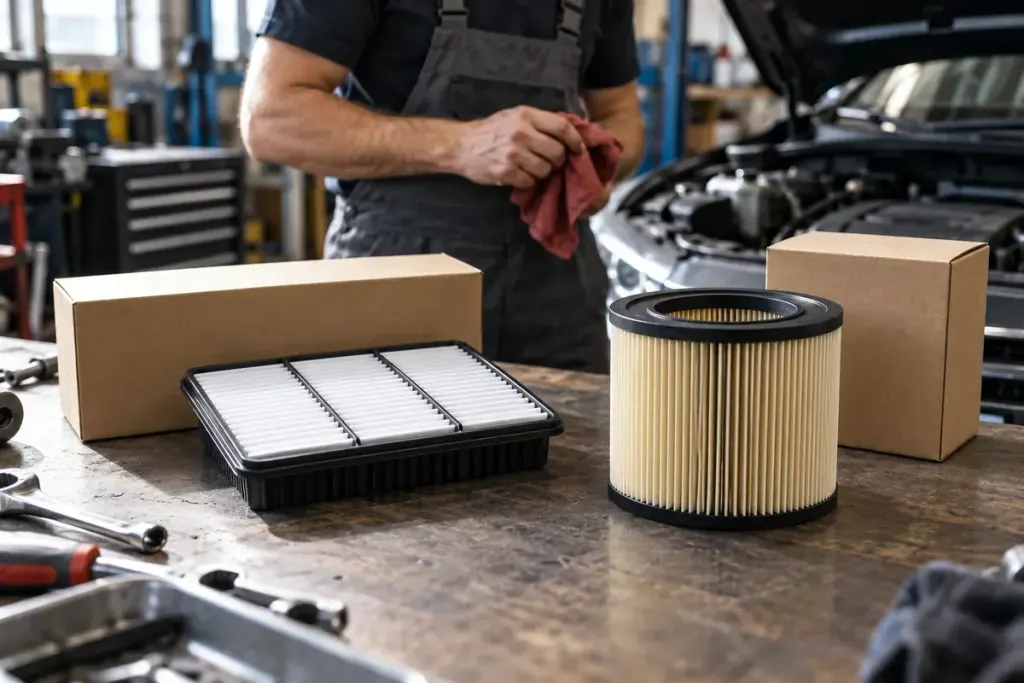
A service adviser mentions an air filter, and you remember replacing one recently. Before rejecting the recommendation or paying for another part, ask which filter they mean. A car with a combustion engine may have both an engine intake filter and a cabin ventilation filter.
The engine filter deals with air entering the engine. The cabin filter serves the air supplied through the passenger ventilation system. Mercedes-Benz’s parts guide explains this distinction. Their separate jobs mean that replacing one does not replace the other.
Start with the vehicle, not the shape
Filters can look similar on a shop shelf while differing in dimensions, seals and intended application. Use the exact model, year and engine details when checking a part number. An electric vehicle has no combustion-engine intake filter, but may still have cabin filtration; follow its own maintenance schedule.
Ask the workshop to show the relevant service entry and explain why replacement is due. The manufacturer’s interval is the starting point, with dusty operating conditions considered according to its guidance. A photograph of a dirty filter does not by itself identify which vehicle it came from or whether an unrelated ventilation fault has been diagnosed.
Record enough detail for next time
- Write “cabin filter” or “engine air filter” on the service record.
- Keep the replacement part number and mileage.
- Note the date and any condition-based recommendation.
- Check whether the housing and retaining clips were correctly refitted.
If doing an approved owner-service procedure yourself, use the manual’s instructions, including any airflow arrow. Do not assume an arrow always means “up.” Avoid forcing a cover or operating the vehicle with a required filter removed.
A persistent smell, weak airflow or running problem may have another cause. A fresh filter is a maintenance item, not a universal diagnosis. Clear naming helps you understand what was changed and what still needs investigation.