
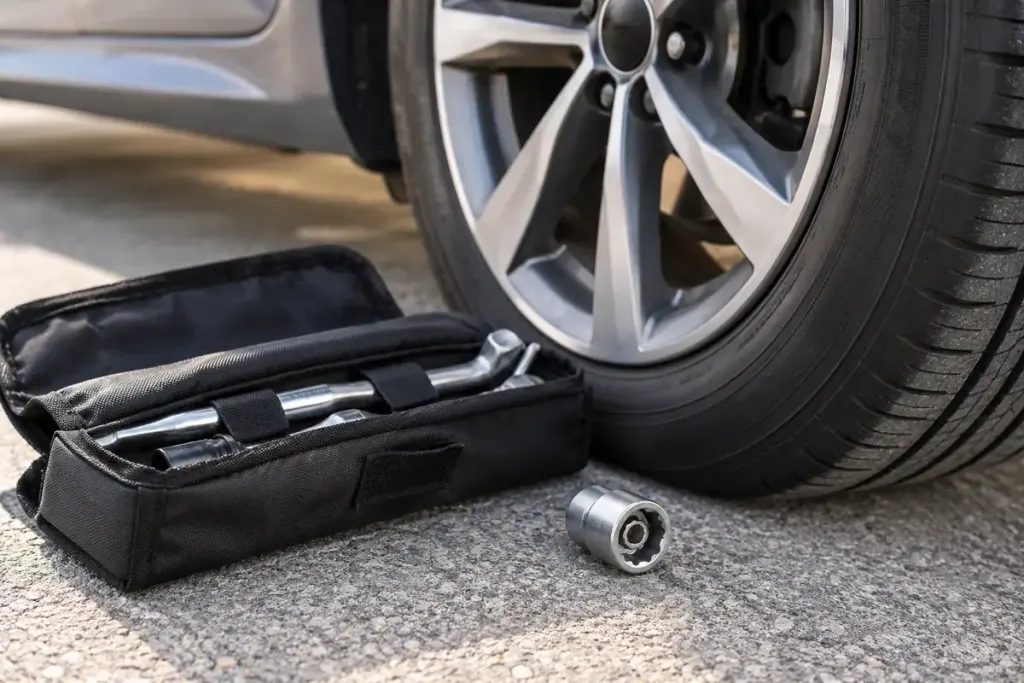
A tyre appointment can stop before the first wheel comes off if the technician cannot find the locking wheel-nut key. The small adapter is easy to overlook when you buy a used car, reorganise the boot or remove a tool kit to make room for luggage.
Find it while the car is parked safely
Check the owner’s manual and the places intended for the vehicle’s tools. A locking wheel nut or bolt uses a matching key; an ordinary socket is not a substitute. Some cars do not have this equipment, and aftermarket locks may differ from the original arrangement.
If you find more than one adapter, do not assume either belongs to the current wheels. Ask the tyre shop or vehicle dealer to confirm the match. Avoid forcing an uncertain key onto a fastener or attempting improvised removal.
Make the handover explicit
At the appointment, tell the technician where the key is stored and ask that it be returned there. After the work, check that it is back before you leave. This is a small task, but it is easier to resolve at the workshop than during a roadside problem weeks later.
For a used-car purchase, include these questions alongside the service paperwork:
- Are locking wheel fasteners fitted to any of the wheels?
- Is the matching key included and usable?
- Is any identification or replacement information available?
- Has a previous owner changed the wheels or fasteners?
Keep identification details privately with your vehicle records. If the key is missing or damaged, contact a qualified workshop or the lock manufacturer through the correct replacement process. Requirements can include proof of ownership.
This is a preparation check, not a wheel-removal lesson. Lifting points, support equipment and tightening requirements are vehicle-specific. Let a professional handle work you are not equipped to perform. A consistent storage place and a ten-second return check make the key available when the right person needs it.