
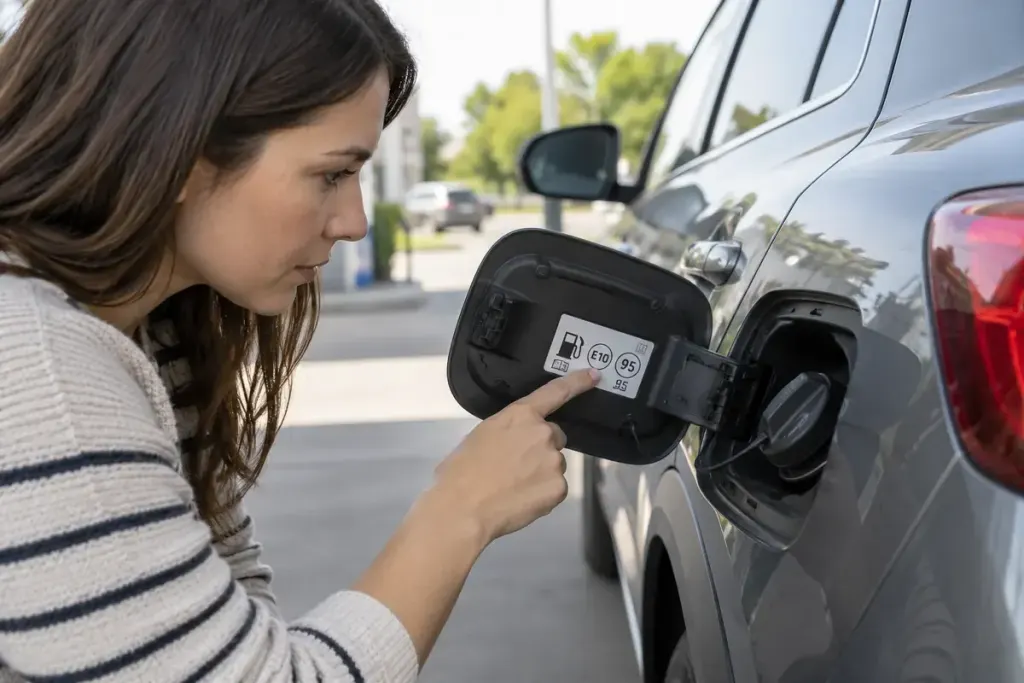
You arrive at a filling station in an unfamiliar car. The pump colours look familiar, but the labels do not. Stop before lifting the nozzle: colour conventions and product names are not a dependable substitute for the vehicle’s fuel requirement.
Start with the label inside the fuel flap and the owner’s manual or rental instructions. Confirm the fuel type and any required specification. If those sources disagree or the label is unreadable, contact the rental provider or vehicle owner before filling.
Resolve the uncertainty while the tank is still closed
A model name may cover different engines, so remembering that another car of the same model used a particular fuel is insufficient. Likewise, a badge or engine sound should not override the vehicle-specific information.
At the pump, read the product label on the actual nozzle you intend to use. Check that you have selected the correct dispenser rather than the neighbouring hose. If unfamiliar octane or fuel-standard terminology creates doubt, ask the provider to clarify the requirement in the local terms.
Keep the return conditions separate
A rental agreement may also specify how much fuel the vehicle should have at return. That is a billing and handover question, separate from which fuel belongs in the tank. Record the initial level as instructed and retain a receipt where the agreement requires it.
Do not continue adding fuel beyond the vehicle and pump instructions simply to make a gauge look fuller. Follow the normal refuelling procedure, including switching off the engine and observing the station’s safety signs.
If you suspect you have added the wrong fuel, stop and seek the rental provider’s or roadside service’s guidance before starting or driving the vehicle. Do not improvise a fix by adding another fuel. A brief check at the flap and nozzle is far easier than trying to diagnose a mistake after leaving the station.