
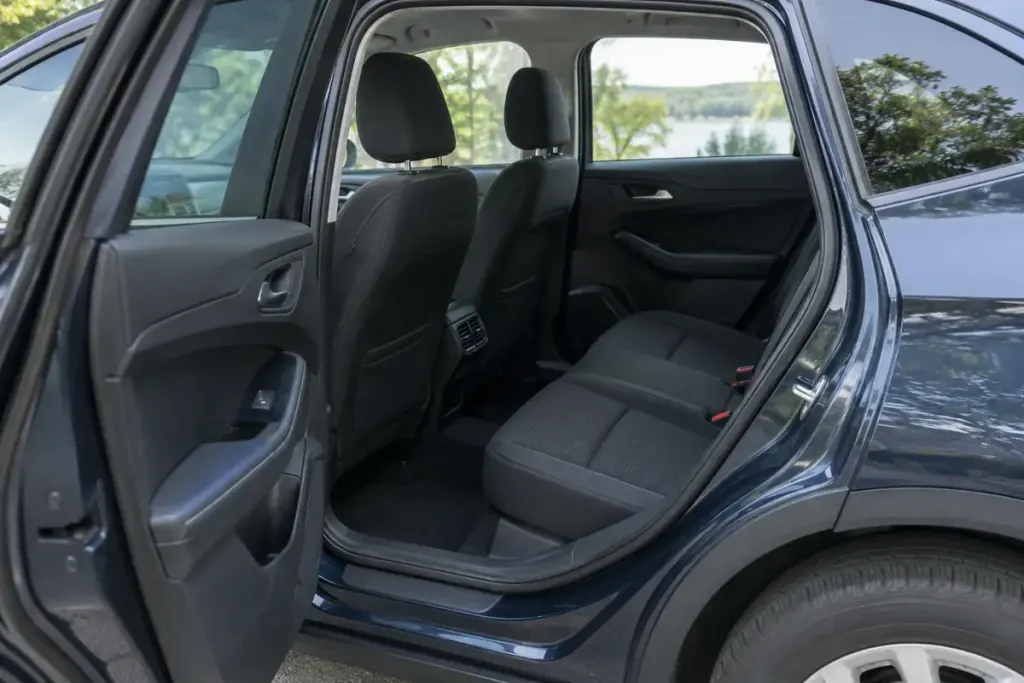
A metal loop behind a rear seat may look ideal for a child-seat tether. Appearance is not enough. Cars can contain luggage tie-downs, seat fittings and dedicated child-restraint anchors close together, and they do not serve interchangeable purposes.
Use the exact vehicle handbook and child-seat instructions before installation. If the designated point is unclear, ask the manufacturer or a qualified child-passenger-safety professional to help identify it.
Understand which connection you are looking for
NHTSA’s explanation of restraint parts distinguishes lower anchors from the top tether and describes their roles. Its installation guidance directs caregivers to both manufacturers’ instructions, including limits and permitted seating positions.
Terminology differs by market and restraint system. Do not convert a photograph of another car into an installation rule for yours. Even similar-looking models or different seat positions can have different arrangements.
Take the manuals to the parked car
- Confirm the vehicle model year and the child restraint’s exact model.
- Find the diagram for the intended seating position.
- Identify the specified attachment point and routing, including any head-restraint instructions.
- Check the applicable size and weight limits and the approved installation method.
- Stop if the actual fittings do not match your interpretation of the diagram.
Do not improvise with a luggage hook, an extension strap or a convenient seat-frame bar. Do not assume using more attachment methods at once is better; follow what the manufacturers permit.
When asking for help, bring both manuals and explain what you cannot identify. A clear question such as “Which of these two loops is the tether anchor for this seat?” is more useful than sending a distant photograph and asking whether everything looks safe.
Revisit the instructions when moving the restraint to another vehicle or seating position. Familiarity with yesterday’s installation does not establish today’s fit. The useful habit is verification at the actual car, with the correct instructions, before a child travels.