
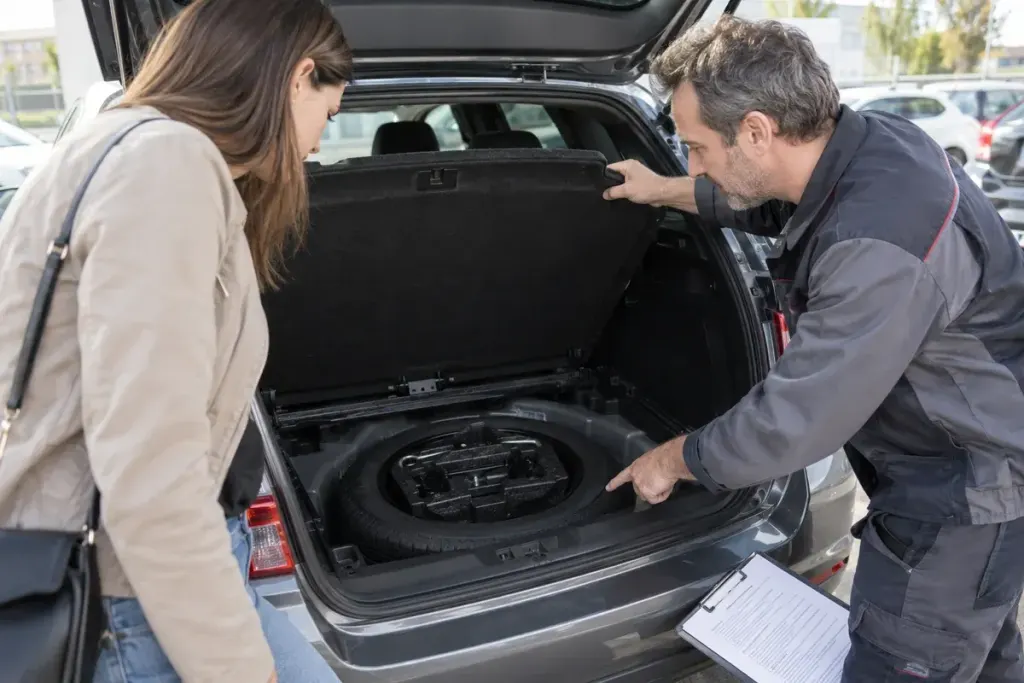
The upholstery looks fresh and the cabin smells strongly of cleaner. That might reflect ordinary preparation for sale. It might also make it harder to notice evidence of earlier water exposure. Neither a pleasant smell nor a suspicious one proves the history.
The sensible response is a structured inspection and a willingness to leave unanswered questions unresolved by not buying. Flood damage is not something to rule out with one clever trick.
Ask the direct question first
Ask whether the vehicle has been flooded, declared a total loss or repaired after significant water exposure. Request supporting records and check that identifying details match the car and documents. Keep the seller’s answer in an appropriate written record.
The US Federal Trade Commission’s flood-damaged-car guidance explains why history checks and careful inspection matter. Title terminology and disclosure requirements differ internationally; use the relevant official systems and local advice for the market where you are buying.
Look for inconsistencies, not a verdict
With permission, observe accessible areas such as the luggage compartment and visible trim edges. Unexplained sediment, water marks, corrosion or mismatched replacement materials can justify further investigation. So can electrical behaviour that the seller dismisses without explanation.
These observations have other possible causes. A stained carpet may result from a small spill; a replaced seat may have a documented reason. Record the inconsistency and ask the inspector to assess it rather than announcing a diagnosis yourself.
Make the inspection genuinely independent
Choose a qualified professional who can advise on the vehicle and the scope of the inspection. Tell them about your concerns in advance. Ask what they can check, what cannot be verified without dismantling and whether further specialist assessment is needed.
A history report can be useful without being complete. An absence of recorded flood damage is not the same as proof that water never entered the vehicle. Combine records, condition and professional findings rather than allowing one clean-looking document to end the enquiry.
Do not let urgency replace evidence
If the seller refuses reasonable checks or pressures you to pay before inspection, pause. A discount does not make an uncertain safety or electrical problem easy to price.
The goal is not to become a flood-damage expert during a viewing. It is to recognise when the available evidence is insufficient and avoid taking on a vehicle whose story you cannot reliably establish.