
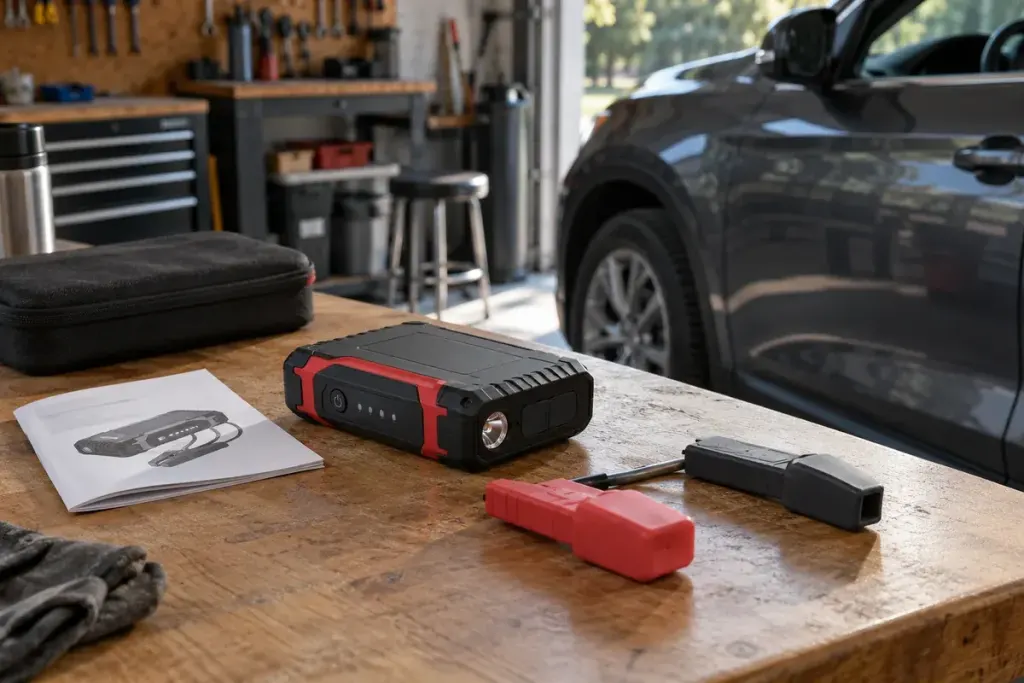
A portable jump starter can sit in the boot for months looking reassuring. When the car will not start, however, the useful questions are practical: is the pack charged, is it suitable for this vehicle, and do you know the approved connection points?
This is a preparation checklist, not a universal jump-start procedure. Vehicles and starter packs differ. The instructions for both products must agree before you use them.
Check the exact combination
Read the vehicle handbook and the pack’s manual while you have light, time and an internet connection. Confirm battery-system voltage, supported vehicle types and any restrictions. An electric or hybrid vehicle may have specific low-voltage procedures; never approach high-voltage components.
For an example of why the details matter, NOCO’s GB20 manual contains model-specific safety instructions, including a warning against jump-starting a frozen battery. Use your own model’s current manual rather than transferring its procedure to another device.
Make storage part of readiness
Check the manufacturer’s storage-temperature limits and recharge schedule. A pack left in unsuitable heat or cold may not be ready simply because its case looks intact. Inspect cables and clamps for damage without opening the unit or improvising repairs.
Keep accessories together and protect exposed terminals as instructed. A small card with the model number and the location of the saved manual can be more useful than relying on a QR code when mobile reception is poor.
Decide what would make you stop
Damage, leakage, unusual swelling, uncertain battery condition or unclear instructions are reasons to seek qualified assistance. Do not bypass safety features to make an incompatible setup work. If the vehicle is in an unsafe roadside position, personal safety takes priority over troubleshooting.
Practise identifying the handbook’s connection points with the equipment disconnected. If you cannot confidently match the diagram to the vehicle, ask a competent technician before an emergency occurs. Familiarity does not require performing an unnecessary live jump start.
Look beyond the successful restart
A car that starts again has not necessarily had its underlying problem fixed. Record what happened, any warning messages and whether the issue repeats, then arrange appropriate diagnosis. The starter is a contingency tool, not a replacement for finding out why the battery or charging system let you down.