
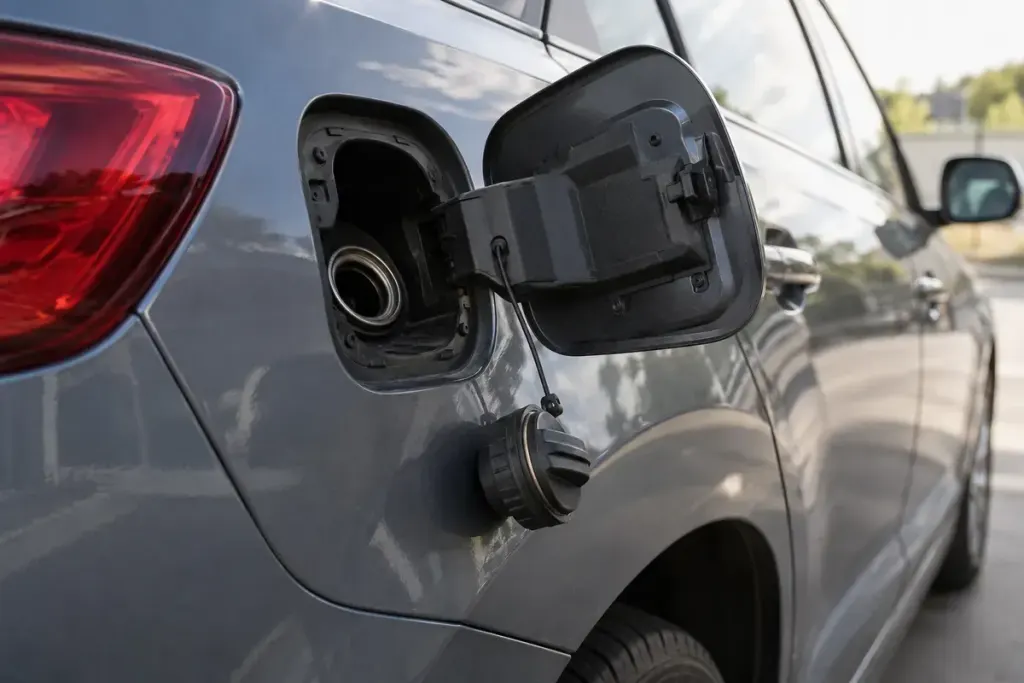
One driver twists a fuel cap until it clicks repeatedly; another closes a capless flap and drives away. Neither habit should automatically be transferred to a different car. The correct closure method belongs to the vehicle’s design and owner instructions.
Before your next fill, find the refuelling section in the manual for the exact model and year. Look for the cap procedure, any warning messages and instructions for a capless inlet. A rental car may differ from the one you use every day.
Finish the refuelling task deliberately
After following the pump and vehicle instructions, replace the cap as directed. Keep the cap’s tether clear of the closing door. With a capless system, avoid inserting fingers or improvised objects to check the internal flap.
If the cap does not engage normally, stop forcing it. Check for an obvious obstruction from a safe position and consult the manual or staff as appropriate. A damaged or unsuitable replacement cap should be assessed rather than tightened more aggressively.
Do not turn one check into a diagnosis
A warning that appears after refuelling may prompt you to check that the closure procedure was completed. That does not prove the cap caused the warning, and it does not justify ignoring an ongoing fault.
Record the exact message, when it appeared and whether there are other symptoms. Follow the manual’s directions for that warning and obtain qualified assistance when required. If there is a fuel smell or visible leakage, treat that as a safety concern rather than an opportunity to experiment.
A useful habit is a brief final look before leaving: nozzle returned, closure completed, fuel door shut and personal items collected. This small sequence works better than relying on a particular number of clicks remembered from a previous car. The aim is a correctly completed refuelling stop, with any unusual behaviour passed to someone equipped to assess it.